Everyone feels the pressure in training and assessment. Learners require quality, workplaces desire job-ready performance, and regulators anticipate evidence that takes on examination. When I mentor new instructors moving via the Cert IV in Training and Assessment, particularly the current TAE40122, the same catches show up time and again. Some are style mistakes that creep in throughout device mapping. Others are assessment-day habits that quietly deteriorate legitimacy. Fortunately is that the majority of are reparable with disciplined planning and small shifts in practice.
This is a practical look at where things normally fail and what to do about it. I will certainly reference usual language from the trainer and assessor course and Certificate IV TAE so you can straighten your approach with requirements that matter on the ground.
Misreading the competency standard
Misreading a device of expertise is the root of lots of later issues. Fitness instructors might latch onto the Application area and efficiency requirements, then miss out on series of problems or assessment problems that essentially form what proof is acceptable. I https://jeffreyqrww388.timeforchangecounselling.com/exactly-how-to-get-ready-for-your-first-vocational-course-after-certificate-iv as soon as assessed a collection of evaluation devices designed for a safety device. The understanding examination was strong. The monitorings were detailed. Yet the analysis conditions required presentation under certain legal contexts and use particular tools. None of that was caught officially. The tools looked brightened, but they can not produce valid results versus the unit.
Good mapping requires greater than a tick-box grid. It asks for a line-by-line interrogation: where each efficiency standard is observed, how each expertise evidence product is elicited, which tasks generate the needed foundation abilities. If you are working through the cert 4 in training and assessment, you will certainly see that the TAE course installs this technique. Converting it into day-to-day practice implies never ever dealing with mapping as a second thought to be bolted on at the end. Begin your design with the requirement, not with a layout you like.
Overreliance on expertise tests
Short tests and composed jobs are reliable. They are likewise the easiest means to misassess somebody. If a device plainly anticipates performance in actual or substitute conditions, a written response can not stand in for observed capability. In one audit I supported, an RTO achieved 95 percent completion for a technological unit making use of open-book theory tests and a project report. It looked effective. It was not compliant. The unit needed repeated presentations utilizing defined devices. Knowledge alone had been mistaken for competence.
If your assessment method leans greatly on created tasks, ask a blunt question: what exactly does this reveal the student can do? When the answer sounds like recall, description, or second-hand coverage, you require to add performance checks. For the Certificate IV training and assessment, this is not academic. It is behavior creating. Fitness instructors need to be able to explain why a piece of evidence shows ability and not just awareness.
Stripping the context out of performance
Context offers implying to efficiency. Eliminate it, and tasks come to be hollow. An assessor I collaborated with designed a great troubleshooting situation for a manufacturing system. The actions matched the efficiency requirements. The issue was, the learner performed it on a common simulator without realistic constraints. There was no time at all pressure, no workplace documents to consult, and no interdependency with upstream or downstream processes. The outcome was a cool efficiency that would crumble on an actual shift.
Real or carefully simulated contexts assist the student program critical judgment. They additionally safeguard you, because they make it possible to claim assessor self-confidence regarding work environment transfer. The analysis conditions in several systems clearly describe actual devices, teams, and safety controls. Check out those thoroughly. If you pick simulation, specify how it mirrors the office in sufficient information that an additional assessor can duplicate your problems. For complex functions, 2 or more various situations aid guard against a task that incidentally suits a narrow experience.
Confusing concepts of analysis with guidelines of evidence
Even experienced instructors in some cases merge these two sets of high quality supports. Concepts of assessment have to do with the process: justness, flexibility, legitimacy, and reliability. Guidelines of proof are about the evidence itself: validity, sufficiency, credibility, and currency. Mixing them commonly leads to weird compromises, like making a task a lot more versatile but after that falling short to validate authenticity.
A well balanced method may look like this. You offer two task alternatives to permit different workplace contexts, which sustains versatility and fairness. You then call for third-party verification, annotated work examples, and a brief viva to confirm credibility and sufficiency. When you hold both frameworks in sight, your decisions make sense to auditors, to industry, and to learners.
Weak or absent practical adjustment
Reasonable adjustment is a professional ability, not a soft-hearted added. It permits you to transform the means evidence is gathered without diluting the proficiency outcome. Trainers brand-new to the certificate 4 training and assessment often under-adjust for worry of disagreement, or over-adjust by transforming the actual efficiency requirement. Neither holds up.
Here is a practical border. You can change the reading level of guidelines, enable oral feedbacks instead of created for theory, offer assistive technology, or timetable even more time. You can not remove a safety-critical action or accept monitoring by a non-competent person. Changes need to still produce valid and enough evidence versus the unit. Record both the demand and the specific change made, ideally with LLN profiling as your baseline.
Failing to identify LLN requires early
Language, proficiency, and numeracy concerns reveal themselves throughout assessment if More helpful hints you do not display earlier. Then you obtain preventable re-sits, demoralised students, and an assessor rushing to rescue a stopping working occasion. This is specifically noticeable in the cert iv training and assessment where the freshly certified assessor usually satisfies a varied friend. A ten-minute LLN sign at enrolment will not address every little thing, but it flags who may require less complex directions, visuals, or coaching in how to translate work environment documents.
Use plain language in job briefs. Develop a short micro-lesson on reviewing a danger matrix or translating a procedure if the unit counts on those abilities. Where numeracy is entailed, give functioned examples throughout training, then eliminate them in analysis while maintaining a formula sheet if the work environment permits it. Line up experiment job reality.
Poor monitoring practice
Observation seems straightforward till you contrast 2 assessors' documents from the very same event. One creates, "Completed job safely and correctly." The various other notes, "Checked seclusion lock, verified tag details match job order, evaluated for no power with meter, fitted individual lock, tried start, then completed step-down treatment." The 2nd document is defensible. The very first is not.
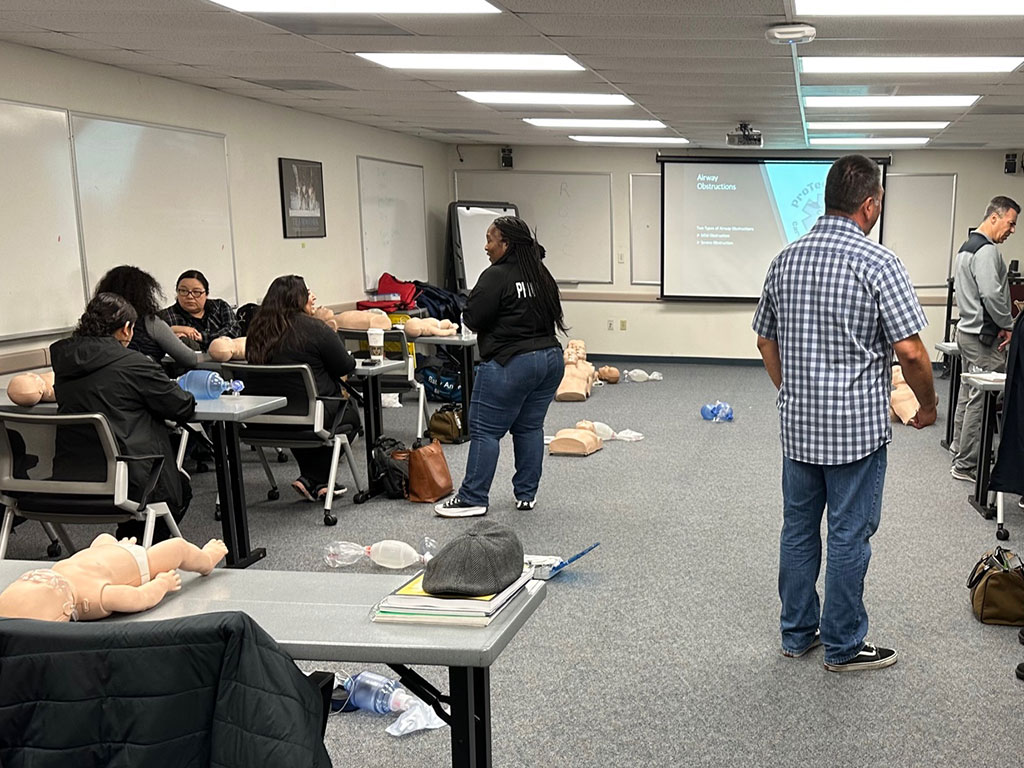
Use behaviourally anchored checklists and include narrative comments that capture decision factors and run the risk of controls. If the device anticipates repeated efficiency, do not compress three efforts right into a solitary elongated monitoring. Arrange them individually or create a task with natural rep. If co-assessing, calibrate in advance. Hold a brief small amounts conversation after the initial couple of monitorings to correct drift.
Ignoring third-party evidence, or counting on it too much
Supervisors can provide valuable point of view, however third-party records are not a magic wand. Unguided, they end up being vague endorsements or workplace national politics in composing. Give clear requirements and examples of acceptable proof. A one-page advice sheet for managers, composed in their language, will certainly obtain you better results than a common type with boxes to tick. Alternatively, if the system requires assessor observation, a third-party report can not replace it. Deal with exterior testimony as corroboration, not substitution, unless the system layout clearly allows it.
Sloppy variation control and document keeping
I when saw 3 different versions of the same assessment tool in active use across a solitary quarter. Each had a little different instructions. The mapping matrix did not match any of them. When an audit group asked which version related to a specific friend, no one could address easily. That is how little management lapses develop huge compliance risks.
Train your group in fundamental record control. Tools ought to carry a clear version number and efficient date. The mapping matrix ought to reference certain product numbers in the specific variation of the device. Shop observations, images, jobs, and RPL proof in a structured repository with regular identifying. When your documents are findable and readable, everything else becomes much less stressful.
Contextualising as well much, or not enough
Contextualisation is enabled, even encouraged, in several trainer and assessor courses, yet there is a tough line in between reasonable customizing and rewriting the proficiency. Getting rid of a required component, narrowing the range of problems to a solitary brand of devices when the task market uses numerous, or including performance criteria absent in the unit prevail mistakes. On the other hand, falling short to contextualise in all can produce common tasks that do not look like the learner's job.
Stay within the boundaries. Adjust terminology to match the work environment. Supply instances that show local treatments. Include reasonable restrictions. Do not delete required end results or add brand-new ones. When doubtful, create a brief contextualisation declaration that lists what you changed and why, referencing the device's framework. That declaration makes interior small amounts much easier.
Over-assessing and under-assessing
Under-assessment is obvious when evidence is thin. Over-assessment hides behind business passion. I have seen programs for a solitary device balloon into a nine-part evaluation profile calling for 18 hours of learner time and 3 hours of assessor marking. A lot of it copied evidence. No stakeholder wins because scenario.
Efficiency originates from well-constructed tasks that accumulate multiple evidence factors in one go. An office task, for example, can reveal preparation, consultation, threat administration, and reporting in a single bundle if designed well. For the cert iv trainer assessor neighborhood, this is a characteristic of maturity: much less paperwork, more authenticity, and a mapping matrix that demonstrates protection without bloat.
Weak feedback culture
"Experienced" and "Not yet qualified" are results, not responses. Actual renovation originates from specific, considerate notes that aid the learner close a void. When coaching new assessors in a Certificate IV training and assessment program, I ask for one sentence on what functioned and one on what to alter, secured to evident practices. For re-submissions, be explicit about what brand-new evidence is needed and what standards it need to satisfy. If you are worn out, stand up to the temptation to write shorthand in your very own jargon. The learner should have quality, and your future self will value it when reviewing the documents months later.
Neglecting recognition and moderation
Tool validation and post-assessment moderation are usually treated as paperwork. They are not. They are your quality assurance system. Pre-use recognition catches imbalance before students feel it. Post-use moderation places wander between assessors and clears up grey areas. Schedule these purposely. Welcome an external market agent at least yearly for risky or high-volume devices. Keep minutes that reveal choices and the proof that supported them. In time, your tools come to be sharper and your assessor group extra consistent.
Currency and market involvement as living practices
The certificate 4 in training and assessment opens the door, but it does not maintain you existing. Regulatory authorities expect money in both occupation abilities and VET technique. Market engagement is not a quarterly email to a friend. It appears like current work environment papers in your training area, recent instances in scenarios, and little updates to tools after actual modifications in the area. If you show WHS, reviewed occurrence bulletins and integrate fresh study. If you examine digital systems, rest with users after a software upgrade. Currency after that appears organically in your products and judgments.
Online distribution pitfalls
Remote delivery and evaluation brought adaptability, but it likewise intensified 2 risks: authenticity and ease of access. Seeing keystrokes is not the like validating identification. Locking evaluations behind bandwidth-heavy platforms leaves out individuals in low-connectivity regions. If you evaluate online, plan for robust identification checks, timed online presentations where possible, and clear guidelines on allowed resources. Offer low-bandwidth alternatives for guidelines and submissions. When you decide to proctor, tell students what information you collect and why, and provide a network for worries. Uniformity issues below. Combined signals erode trust.
RPL shortcuts and bottlenecks
Recognition of previous understanding ought to be efficient, but it can not be laid-back. The quick catch is approving top-level job titles and old certifications as if they were existing, enough evidence. The slow-moving trap is making RPL kits that request for everything imaginable, paralysing candidates and assessors alike.
An experienced RPL assessor asks targeted concerns: what did you do, just how often, under what problems, with what results, and when. They seek work environment artefacts that show decision-making and conformity, not simply participation. They triangulate with a short expertise discussion and, if needed, a void job. Keep RPL focused on the proof that issues, and insist on money. For risky proficiencies, three pieces of triangulated evidence per crucial end result is a practical benchmark.
Scheduling that undermines evaluation quality
Time pressure motivates shortcuts. Assessors press observations right into marathons, skip pre-briefs, and create minimal notes. Supervisors double-book fitness instructors who are also assessors, so neither function is done well. When a Certificate IV training and assessment graduate enter an active RTO, this is the shock.
Protect analysis windows. Plan for configuration, instruction, presentation, wondering about, and recording. If you need 90 mins, schedule 90, not 45 with a promise to finish later. A practical timetable is not a luxury. It is a stability safeguard.
A compact pre-assessment checklist
- Confirm you have the existing unit and tool variations, with mapping at hand. Check LLN and any kind of concurred practical changes, taped in writing. Verify analysis conditions, including equipment, environment, and safety. Prepare observation prompts and questions straightened to the rules of evidence. Communicate assumptions to learners and any kind of 3rd parties in plain language.
When an audit flags a void, action quick and methodically
- Isolate the scope: which devices, which accomplices, which device versions. Stabilise distribution: stop briefly affected assessments or include acting controls. Gather proof: mapping, samples, assessor notes, validation records. Fix source: redesign tasks, re-train assessors, update procedures. Prove closure: re-validate, modest new outcomes, and file changes.
A brief word on psychometrics, without the jargon
Not every RTO needs full-scale thing evaluation, yet some light discipline boosts your composed instruments. Track which questions on a regular basis flounder capable learners. If a single distractor in a multiple-choice item brings in most responses, it may be unclear or miskeyed. If an essential understanding item shows a pass price listed below 40 percent throughout associates, examine your mentor sequence and concern wording. Little data habits protect against huge material misunderstandings.
Bringing it together in practice
Imagine you are upgrading a safety and security induction collection. You begin by re-reading the devices and annotating assessment conditions. You review your mapping, after that style one integrated workplace job that covers threat recognition, danger analysis, and reporting. You create clear directions at an accessible analysis degree, embed a short structured interview to probe understanding, and create your monitoring list with behaviourally secured statements. You set up a supervisor guidance sheet for third-party evidence and specify what pictures or scans count as appropriate artefacts. Prior to rollout, a coworker validates the tool versus the devices, and an industry contact checks realistic look. You pilot with a tiny group, modest the initial 5 results, tweak two ambiguous directions, and afterwards release version 1.1. That is the cert iv tae way of thinking applied, not as a compliance exercise but as good craft.
The distinction appears in four places. Learners feel ready since the jobs make good sense. Assessors feel great due to the fact that the tools sustain their judgment. Employers see brand-new hires that in fact do at the anticipated level. Auditors see tidy alignment and reasonable evidence. That is what a durable training and assessment course need to deliver.
If you are early in your journey with the certificate 4 in training and assessment or tipping up to make duties after years on the devices, build behaviors around these usual pitfalls. Check out the standard very closely. Layout for efficiency, not paperwork. Change for people without readjusting the expertise. Keep your documents beautiful. Verify and modest with intent. And maintain one eye on the industry as it shifts. The remainder is consistent job, performed with treatment, that transforms analyses right into reputable tales regarding what people can do.